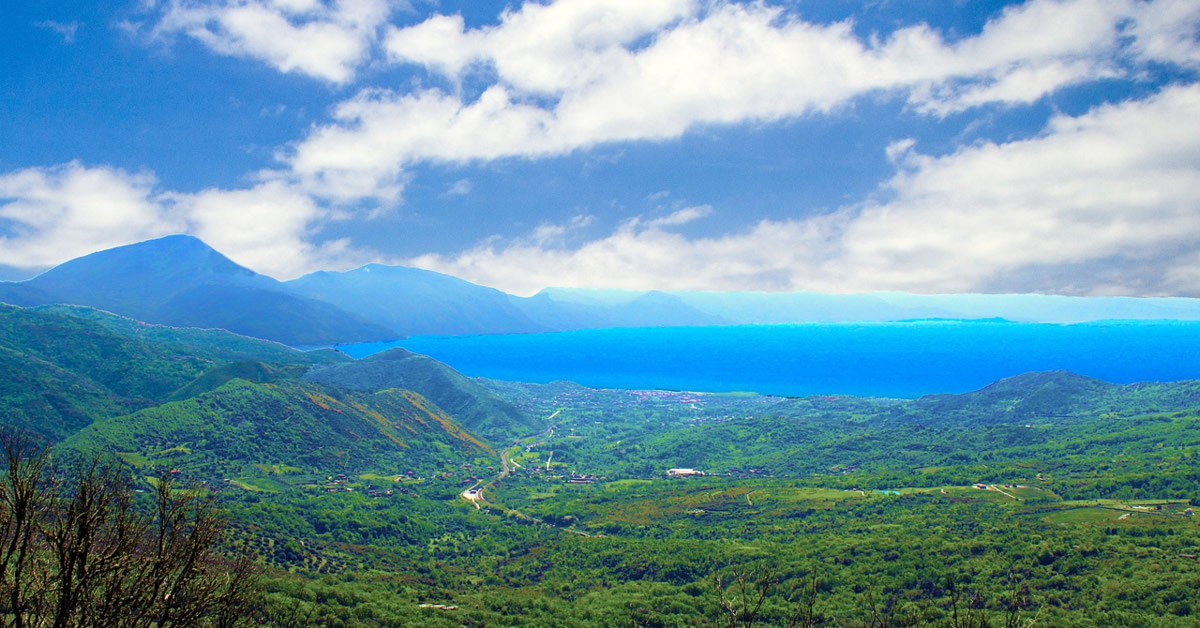
Suspended between seas and mountains, this area of southern Campania offers an incredible variety of beaches, coves, sea caves, cliffs and breath-taking landscapes. There are so many things to see (and taste)!
In Cilento there are seaside resorts that amaze even the eyes most accustomed to beauty, and the Cilento and Vallo di Diano National Park collects the enthusiasm of those who love to get lost in unspoiled nature.
Many beaches in Cilento each year win the coveted recognition of the Blue Flag, which certifies the environmental quality of the seaside resorts. The rugged Cilento coast offers ever-changing spectacles to those who travel along it.
Next to the sea, the Cilento hinterland is dotted with points of historical and naturalistic interest and is the place of origin of some food and wine products of recognized value, such as white figs. Try the mozzarella in this area: you’ll thank us later!
Many of the Greek and Roman myths were set on the Cilento coast. The most famous myth is that of the island of the sirens, in the Odyssey. According to legend, the island that inspired Homer is probably in front of Punta Licosa, near Castellabate. Palinuro bears the name of the helmsman of Aeneas with a tragic fate, and so a thousand other timeless stories intertwine their threads in this land.
Unmissable stops in Cilento
The Pertosa Caves are the only caves in Italy where it is possible to navigate on an underground river, the Negro. Inside, in addition to the spectacular suggestions of lights and shadows, the remains of a village of stilts from the second millennium BC, unique in Europe, are preserved. The nearby Caves of Castelcivita are one of the largest speleological complexes in southern Italy.
Roscigno Vecchia is a town-museum: a well-known journalist from the newspaper “Il Mattino” in the Eighties called it “The Pompeii of the twentieth century”, due to the truly unique set of circumstances that have suspended this place over time: the frequent landslides that have affected the ancient village starting from the sixteenth century have forced its inhabitants to “move” the location of the village several times. Even today, the old part still retains the urban and architectural features of an eighteenth-century town that lived on agriculture and pastoralism.
Punta Licosa is loved by snorkelers and by those who love going to the sea surrounded by wild nature. It falls within the Protected Marine Area of Santa Maria di Castellabate, and is accessible from two points by land or directly from the sea. Its lighthouse, the remains of a pier – partly submerged – and the ruins of a Roman villa bewitch every lucky person who arrives in this place.
Elea/Velia is an archaeological area that preserves the remains of the ancient polis of Magna Graecia. The excavations, close to the railway and not far from Ascea Marina, are famous because they are associated with the Eleatic philosophical school, which included Parmenides and Zeno among its members.
The Certosa di Padula – the first charterhouse born in Campania, the largest in size in Italy – is one of the most sumptuous Baroque monumental complexes in the south, with its cloisters, courtyards, kitchens and cells that many monks have hosted in time. An evocative, spiritual and unforgettable place.
Baia degli Infreschi is perhaps the most beautiful cove in Marina di Camerota: the trekking path that leads to its beach is tiring but spectacular, and the view that awaits those who arrive at the destination offers an unparalleled spectacle: its access is limited to a certain number of people a day, to preserve the most precious naturalistic aspects.
Palinuro boasts many beautiful beaches: from that of the Saline to the French Pier, from the Porto beach to the Baia del Buon Dormire, to finish at the Arco Naturale beach – a real postcard of the place – and the Molpa di Palinuro. All unmissable!